Company data APIs power everything from KYB verification and credit risk checks to sales prospecting and product enrichment. If your team needs structured, reliable business information delivered programmatically, choosing the right API is one of the most consequential infrastructure decisions you'll make.
But not all company data APIs are built the same. Some pull data directly from government registries. Others aggregate from third-party sources. Some are built for developers. Others are built for analysts who never touch a terminal.
This guide breaks down six of the most established company data APIs on the market in 2026 — what they do well, where they fall short, and what they actually cost. Whether you're building a compliance workflow, enriching a CRM, or powering a fintech product, this should help you make a faster, more informed decision.
Quick Comparison Table
Feature | Global Database | Zephira.ai | Dun & Bradstreet | Monetaiq | Moody's (Orbis) | FactSet |
|---|---|---|---|---|---|---|
Global company coverage | 300M+ companies | 300M+ companies | 600M+ businesses | 400M+ companies | 600M+ entities | 180K+ securities-focused |
Countries covered | 195 | 150+ | 200+ | 100+ | 200+ | 100+ |
Primary data source | Government registries | Government registries + AI enrichment | Proprietary D&B Data Cloud | Stock exchanges, global registries | 170+ providers + proprietary sources | Financial filings, exchanges, proprietary |
KYB / verification | ✅ Yes | ✅ Yes | ✅ Yes | ❌ Limited | ✅ Yes | ❌ No |
Ownership / UBO data | ✅ Yes | ✅ Yes | ✅ Yes | ❌ No | ✅ Yes (deep) | ✅ Partial (public companies) |
Financial statements | ✅ 20 years | ✅ Yes | ✅ Yes | ✅ Core strength | ✅ 48M+ with financials | ✅ Core strength |
Credit risk scoring | ✅ Yes | ❌ No | ✅ Yes (D&B Rating) | ❌ No | ✅ Yes (EDF-X) | ❌ No |
Contact / people data | ✅ Yes | ✅ Yes | ✅ Yes | ❌ No | ✅ Limited | ✅ Limited |
Free trial | ✅ Yes | ✅ Yes | ✅ Limited | ✅ Yes | ❌ No | ❌ No |
Starting price | Custom (credit-based) | $49/mo | Custom ($25K+/yr typical) | $49/mo | Custom (enterprise) | ~$12K+/yr per user |
Best for | Compliance, KYB, sales teams | Developers, fintechs, RegTechs | Enterprise risk & credit | Financial data & analysis | Enterprise compliance & risk | Investment research & analytics |
Global Database
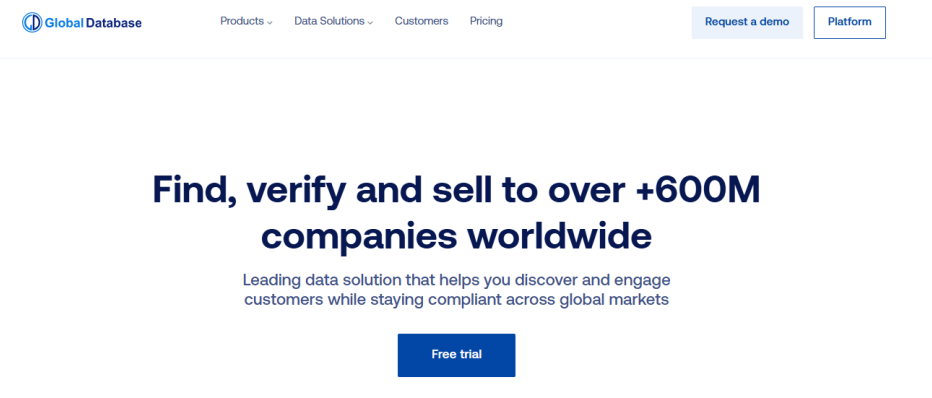
Best for: Compliance teams, sales teams, and product teams needing government-sourced company data
Coverage: 300M+ companies across 195 countries
Pricing: Credit-based plans, free trial available
API docs: api.globaldatabase.com/docs/v1
Overview
Global Database is a B2B intelligence platform that sources company data directly from over 400 government registries worldwide. Unlike providers that aggregate data from third-party vendors, Global Database connects to official registry sources — companies house filings, tax registries, and regulatory databases — to deliver verified company profiles, financial data, ownership structures, and contact information.
The platform serves both compliance and commercial use cases. Sales teams use it for prospecting and enrichment. Compliance teams use it for KYB verification and ongoing risk monitoring. Product teams embed it into onboarding flows and customer-facing applications. Clients include Uber, AWS, WeWork, and SAP.
Key Features
Government registry-sourced data — direct connections to 100+ official registries for verified, first-party company records
Company enrichment API — look up full company profiles using just a domain name or email address, including financials, employees, and corporate structure
UBO and ownership mapping — identify ultimate beneficial owners and trace corporate hierarchies across borders
Credit risk reports — credit scoring and financial risk assessment with up to 20 years of financial history
Form auto-population — short-form lead capture that auto-fills company details from minimal inputs
Webhook-based monitoring — automatic alerts when company data changes (ownership shifts, financial updates, status changes)
KYB verification API — automate client onboarding with real-time company verification, credit checks, and shareholder identification
Limitations
Pricing is not fully transparent on the website — requires a sales conversation for custom plans
Coverage depth for smaller regional companies can lag behind larger economies
Pricing
Global Database uses a credit-based pricing model. You purchase a set number of credits, and each API call consumes credits based on the endpoint. Pricing depends on the number of users, data exports needed, and country coverage. Individual credit reports start at $19. Subscription plans range from starter tiers for small teams to enterprise agreements. A free trial is available.
Best For
Teams that need verified, registry-sourced company data for compliance, KYB, or sales workflows — and want a single platform covering both use cases without juggling multiple vendors.
FAQs — Global Database API
What data sources does Global Database use?
Global Database connects directly to over 100 government registries worldwide. This means the company records, financial filings, and ownership data come from official sources rather than being scraped or resold from third-party aggregators.Can I use Global Database API for KYB verification?
Yes. The API supports automated KYB workflows including company verification, credit scoring, shareholder identification, and UBO mapping. You can integrate these checks into your onboarding flow to verify entities in real time.How does Global Database's enrichment API work?
You submit a company domain name, email address, or registration number. The API returns a full company profile including firmographics, financials, corporate structure, key employees, and contact information.
Zephira.ai
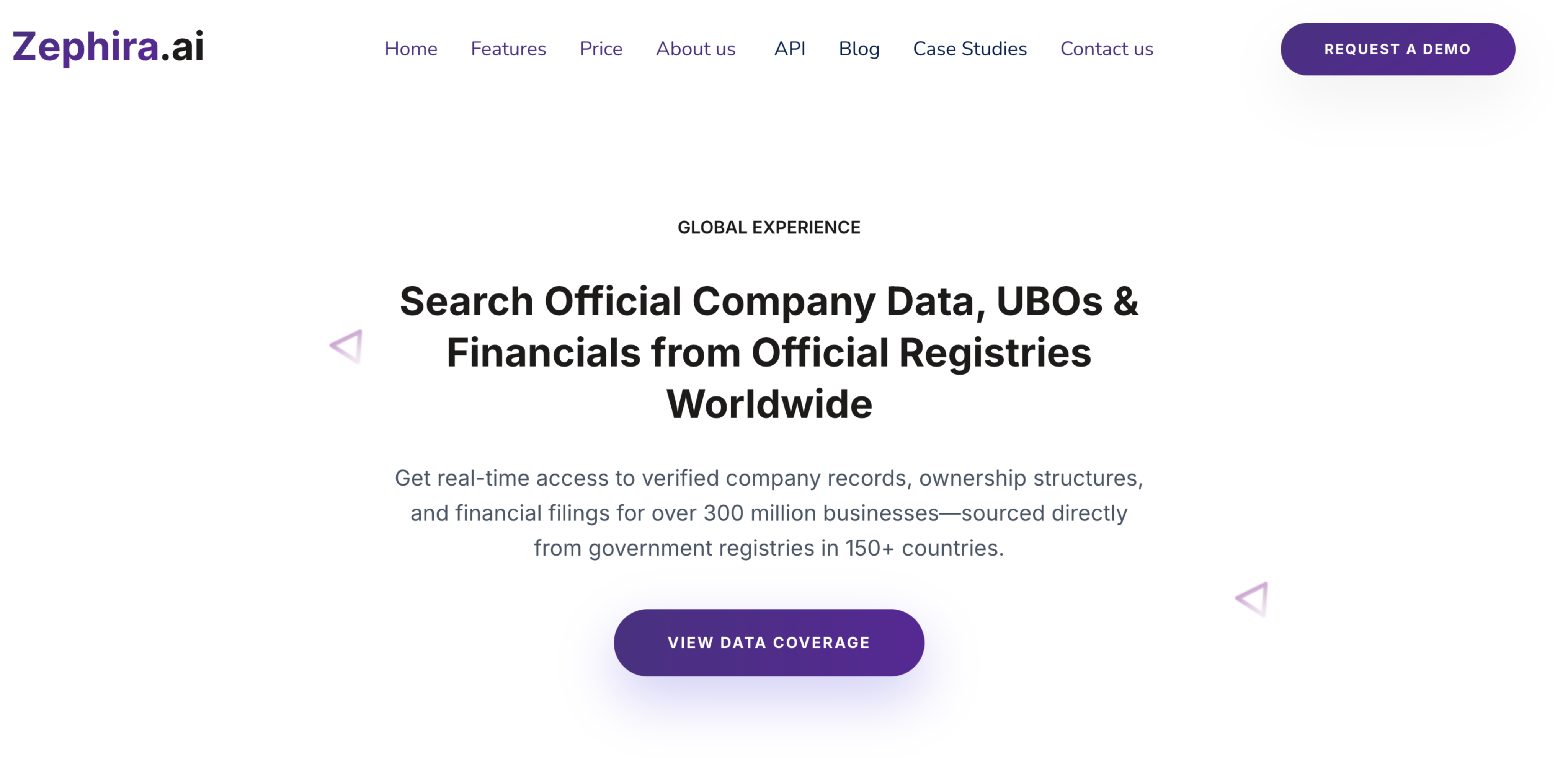
Best for: Developers, fintechs, and RegTech platforms building KYB and compliance products
Coverage: 300M+ companies across 150+ countries
Pricing: From $99/mo (Starter)
API docs: zephira.ai/api
Overview
Zephira.ai is an API-first company data platform built for technical teams. It pulls data directly from government registries across 150+ countries and uses AI to normalize and enrich records across jurisdictions. The platform is designed for programmatic consumption — structured JSON outputs, fast response times, and scalable rate limits.
Where some providers focus on building UI-heavy research platforms, Zephira is built for embedding. Fintechs integrate it into onboarding flows. RegTech platforms use it for automated KYB checks. Data teams pipe it into enrichment pipelines. The focus is on production-grade API performance, not manual research workflows.
Key Features
Registry-sourced data — verified company records pulled from official government registries in 150+ countries
AI-powered normalization — legal forms, industry codes (NAICS, NACE, SIC), and company statuses are standardized automatically across jurisdictions
KYB-ready endpoints — company identifiers, tax IDs, legal structure, and ownership/UBO data structured for compliance workflows
Enrichment API — look up company and employee details from domain or email, suitable for customer-facing or internal enrichment
Prospecting API — search and filter companies by location, size, industry, and turnover
Monitoring and webhooks — real-time notifications on company changes
Limitations
Not designed for sales prospecting contact data (no direct outbound phone/email focus)
Best suited for technical teams — less ideal for non-technical users who prefer a UI-driven research experience
Newer platform with less brand recognition compared to legacy providers
Pricing
Zephira.ai offers transparent, tiered pricing:
Starter — $99/mo (100 full company profiles, 30 API calls/min)
Pro — $299/mo (600 full company profiles, 100 API calls/min)
Business — $1,000/mo (3,000 full company profiles, 300 API calls/min)
Enterprise — custom pricing (high-throughput, up to 6,000 API calls/min)
Best For
Engineering and product teams at fintechs, RegTechs, and SaaS platforms that need clean, normalized registry data via API — particularly for KYB automation and compliance product development.
FAQs — Zephira.ai API
Is Zephira.ai suitable for KYB compliance?
Yes. The platform is specifically built for KYB workflows. It provides structured company identifiers, registration numbers, tax IDs, ownership chains, and legal form data — all sourced from government registries and normalized for automated processing.How does Zephira.ai handle data from different countries?
Zephira uses AI algorithms to normalize data across jurisdictions automatically. Legal forms, industry classifications, and company statuses are standardized so that records from different countries are comparable without manual mapping.Does Zephira.ai offer a free trial?
Yes. You can request a demo to test the platform before committing to a paid plan.
Dun & Bradstreet
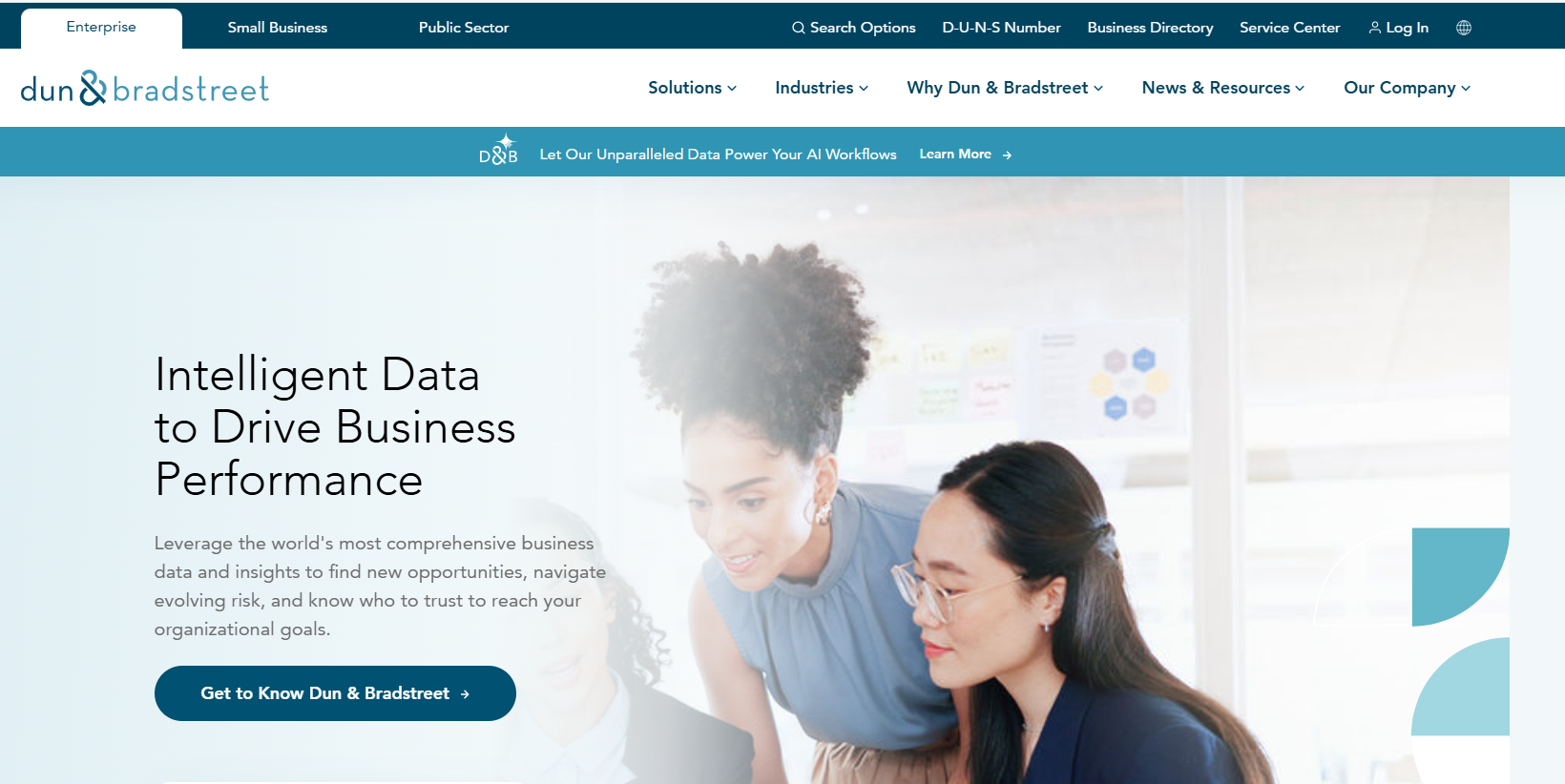 Best for: Enterprise teams focused on credit risk, supplier management, and global business verification
Coverage: 600M+ business records worldwide
Pricing: Custom (typically $25,000+/yr for API access)
API docs: developer.dnb.com
Overview
Dun & Bradstreet is the longest-established name in business data. Founded in 1841, D&B built the commercial credit industry and invented the D-U-N-S Number — a proprietary identifier now used by governments, procurement teams, and financial institutions worldwide to verify business entities.
Their flagship API product, D&B Direct+, provides access to the D&B Data Cloud, which covers over 600 million business records globally. The platform serves enterprise use cases across credit risk, compliance, sales intelligence (via D&B Hoovers), and master data management.
For large organizations with existing D&B relationships, the API integrates into established workflows. For newer teams or startups, the complexity and cost can be significant barriers.
Key Features
D-U-N-S Number — the global standard for business identification, used by governments and procurement departments worldwide
D&B Data Cloud — 600M+ business records with firmographics, financials, and corporate hierarchies
Credit risk scoring — proprietary D&B Rating, Failure Score, and Delinquency Predictor for assessing financial health
D&B Direct+ API — real-time API access to company data, identity resolution, and risk intelligence
Corporate hierarchy mapping — parent-subsidiary relationships and family tree structures
Master data management — D&B Connect for benchmarking, enriching, and monitoring data quality against the D&B Data Cloud
Salesforce and CRM integrations — native connectors for embedding D&B data into sales workflows
Limitations
Pricing is opaque and typically requires negotiation — contracts often start at $25K+ per year for API access
Vendor lock-in via D-U-N-S Number — once adopted, switching providers requires significant migration effort
Platform complexity — the breadth of products and add-ons can make it difficult to identify what you actually need
Data freshness varies — while the database is massive, update frequency depends on the region and data type
Credits expire after 12 months and don't roll over
Pricing
D&B uses custom, quote-based pricing. Enterprise API access (D&B Direct+) typically starts at $25,000+ per year, with final pricing depending on data volume, number of users, geographic scope, and add-ons selected. Additional costs may apply for premium features like intent data, job change alerts, and advanced API access.
Best For
Large enterprises with established procurement processes that need a globally recognized business identifier (D-U-N-S), deep credit risk data, and master data management capabilities.
FAQs — Dun & Bradstreet API
What is a D-U-N-S Number?
A D-U-N-S Number is a unique nine-digit identifier assigned by Dun & Bradstreet to individual business entities. It is widely recognized and often required for government contracts, regulatory filings, and supplier onboarding processes globally.How much does D&B API access cost?
D&B Hoovers Essentials starts at $49/month. Enterprise API access via D&B Direct+ is quote-based and typically starts at $25,000+ annually. Final pricing depends on data scope, user count, and features required.Can I use D&B for KYB verification?
Yes. D&B provides company verification, credit risk scoring, ownership data, and compliance screening through its APIs. However, the depth of verification data varies by country and data package.
Monetaiq
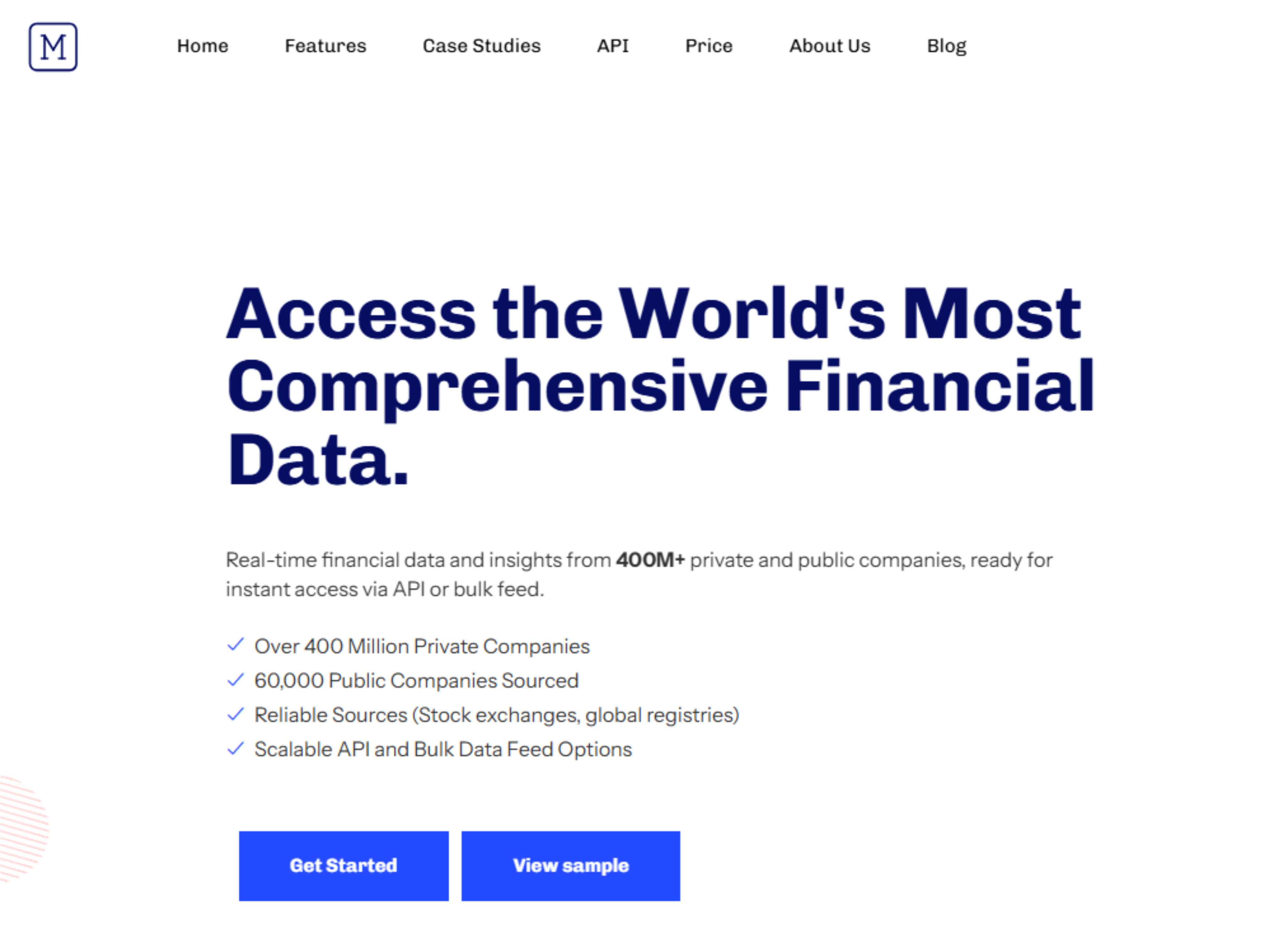 Best for: Teams that need structured financial data for private and public companies
Coverage: 400M+ private companies, 60,000 public companies across 100+ countries
Pricing: From $49/mo (Starter)
Website: monetaiq.com
Overview
Monetaiq is a financial data provider focused specifically on company financial statements, credit metrics, and financial health indicators. Unlike broader company data platforms that cover firmographics, contacts, and compliance, Monetaiq specializes in one thing: financial data for both private and public companies.
The platform sources public company data from global stock exchanges and regulatory filings. Private company data comes from verified databases and company disclosures. Data is available through a REST API or bulk data feeds, making it suitable for integration into analytics platforms, credit models, or internal tools.
Monetaiq's strength is its focus. If your primary need is balance sheets, income statements, cash flow data, and credit risk metrics — without the overhead of a full compliance or prospecting platform — this is a lean, accessible option.
Key Features
Financial statement data — balance sheets, income statements, and cash flow reports for 400M+ private and 60,000+ public companies
Multiple lookup methods — search by company name, website URL, LinkedIn profile, registration number, or VAT number
Bulk data feeds — large-scale data delivery in CSV, JSON, or custom formats for data pipeline integration
API access — REST API for real-time financial data retrieval, scalable based on business needs
Public company focus — quarterly refreshed data sourced directly from stock exchanges and regulatory filings
Integration examples — documentation includes Python, Java, and other common language implementations
Limitations
Focused exclusively on financial data — does not cover firmographics, contact data, or compliance/KYB use cases
No ownership or UBO data
No KYB verification or compliance screening features
Less suited for sales prospecting or outbound workflows
Relatively new player — smaller ecosystem and less brand recognition compared to legacy financial data vendors
Pricing
Monetaiq offers straightforward, tiered pricing:
Starter — $49/mo
Pro — $99/mo
Business — $199/mo
Enterprise — custom pricing
API access and custom dashboards available on higher-tier plans.
Best For
Investment research firms, fintech companies building credit products, and corporate finance teams that need structured financial data without the overhead and cost of a full enterprise platform.
FAQs — Monetaiq API
What kind of data does Monetaiq provide?
Monetaiq specializes in financial data: balance sheets, income statements, cash flow reports, and credit risk metrics for both private and public companies. It does not provide contact data, compliance screening, or firmographic details.How is Monetaiq's data sourced?
Public company data comes from global stock exchanges and regulatory filings. Private company data is derived from verified databases and company disclosures across 100+ countries.Can I use Monetaiq for KYB or compliance?
Not directly. Monetaiq is focused on financial data and does not offer entity verification, ownership mapping, or sanctions screening. For KYB workflows, you would need to combine Monetaiq with a registry-focused provider.
Moody's (Orbis)
 Best for: Enterprise compliance, risk management, and due diligence teams
Coverage: 600M+ entities worldwide (48M+ with detailed financials)
Pricing: Custom enterprise pricing
Website: moodys.com/orbis
Overview
Moody's Orbis (formerly Bureau van Dijk) is one of the most comprehensive corporate intelligence platforms available. Acquired by Moody's in 2017 for €3 billion, Orbis has been the go-to database for banks, regulators, auditors, and enterprise compliance teams that need deep ownership data, standardized financials, and corporate structure mapping.
Orbis aggregates and standardizes data from over 170 providers plus hundreds of proprietary sources. The platform's strength lies in its treatment of data — it doesn't just collect information, it normalizes it to make cross-border company comparisons possible. This makes it particularly powerful for compliance, M&A due diligence, and risk analysis.
Data is accessible through the Orbis web interface, through APIs, via bulk feeds, or through connectors for platforms like Salesforce. For large financial institutions and multinational corporations, Orbis is often the default choice.
Key Features
Massive entity coverage — 600M+ entities worldwide, with 48M+ including detailed financial data
Ownership and corporate hierarchy — industry-leading UBO identification and complex corporate structure mapping
170+ data sources — aggregated from information providers and proprietary sources, normalized for comparability
Compliance and KYC/KYB — purpose-built tools for entity verification, sanctions screening, and ongoing monitoring
Credit risk analytics — EDF-X credit risk scoring with probability of default modeling
Multiple delivery formats — web interface, REST API, bulk feeds, cloud delivery, and CRM connectors (Salesforce)
Country-specific products — regional databases (Amadeus for Europe, BankFocus for banking, etc.)
Limitations
High cost — enterprise pricing puts it out of reach for startups and smaller teams
Rigid delivery models — historically designed for large institutional workflows, not developer-first API consumption
Long procurement cycles — sales and implementation process can take weeks or months
Integration flexibility is improving but still lags behind API-first providers
Data from 170+ sources means some records may reflect different refresh cycles and data quality levels
Pricing
Moody's Orbis uses custom enterprise pricing. Contracts are typically negotiated annually based on the number of users, data modules selected, and delivery format. Expect minimum commitments well into five figures annually, with large institutional deployments reaching six figures or more. There is no self-serve option or public pricing page.
Best For
Banks, regulators, auditors, and large enterprise compliance teams that need the deepest possible ownership data, cross-border corporate structure mapping, and regulatory-grade entity verification.
FAQs — Moody's Orbis API
How many companies does Orbis cover?
Orbis contains information on more than 600 million entities worldwide. Of these, approximately 48 million include detailed financial information. The database covers both public and private companies across all countries.What makes Orbis different from other company data providers?
Orbis's primary differentiation is the depth of its ownership and corporate hierarchy data. The platform traces complex ownership structures, identifies ultimate beneficial owners, and maps corporate networks — which is critical for compliance, KYC, and anti-money laundering workflows.Does Orbis offer API access?
Yes. Orbis data can be accessed via REST API, bulk feeds, cloud delivery, and through connectors for platforms like Salesforce. However, API access requires an enterprise agreement and is not available on a self-serve basis.
FactSet
 Best for: Investment professionals, hedge funds, and asset managers
Coverage: 180,000+ active and inactive securities, 200+ global exchanges
Pricing: From ~$12,000/yr per user
API docs: developer.factset.com
Overview
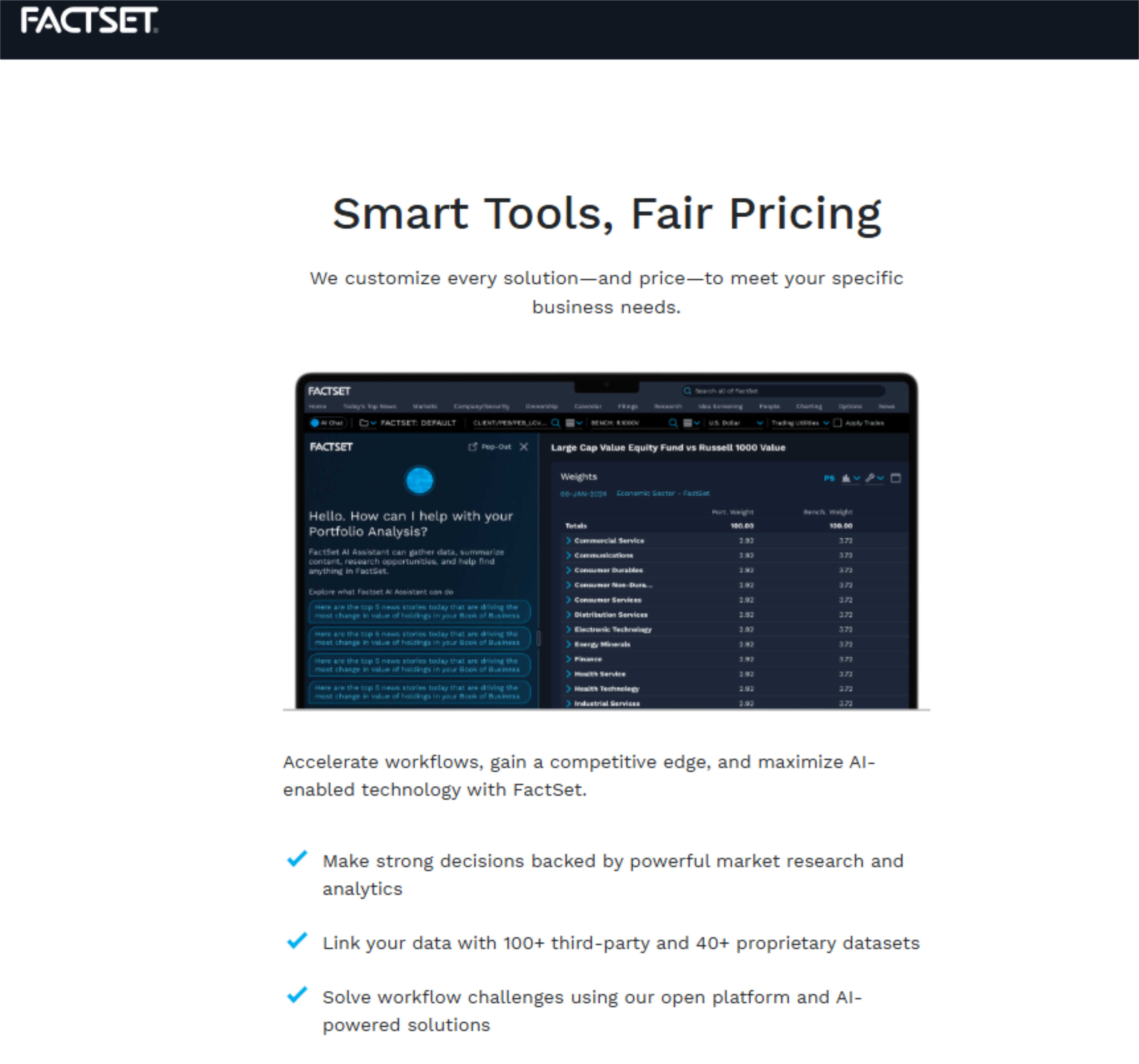
FactSet is a financial data and analytics platform built for the investment management industry. It serves over 133,000 financial professionals across hedge funds, asset managers, investment banks, and corporate finance teams. The platform provides an extensive API catalog covering pricing, fundamentals, estimates, ownership, and alternative data.
Unlike company data APIs focused on compliance or B2B intelligence, FactSet's strengths are in financial modeling, portfolio analysis, and securities-level data. Its company data centers on publicly traded entities and their financials, ownership structures, and market data. The developer portal includes SDKs for Python, JavaScript, and other languages, with comprehensive documentation.
FactSet is not a general-purpose company data API. It's a specialized financial workstation and data platform that happens to expose its capabilities via APIs. For investment research use cases, it's among the best in class. For KYB, compliance, or B2B prospecting, it's not the right tool.
Key Features
Extensive API catalog — 100+ APIs covering prices, fundamentals, estimates, ownership, ESG, debt structure, and alternative data
Global exchange coverage — real-time and delayed data from 200+ global exchanges, normalized across asset types
Company fundamentals — financial statements, ratios, and segment data for public companies worldwide
Ownership intelligence — institutional ownership, insider transactions, and fund holdings data
SDKs and developer tools — official SDKs for Python, JavaScript/TypeScript, R, and Java with OAuth 2.0 authentication
Portfolio analytics — risk modeling, performance attribution, and what-if analysis through dedicated APIs
Entity report builder — APIs for creating entity tree reports showing complex ownership structures
Limitations
Focused almost exclusively on publicly traded companies and securities — very limited private company data
No KYB verification, compliance screening, or registry-sourced data
No B2B contact data or sales prospecting features
High entry cost — minimum ~$12K/yr per user, with enterprise deployments costing significantly more
Designed for the investment management industry — not built for general company data use cases
Pricing
FactSet pricing starts at approximately $12,000 per user per year, with add-ons for ESG data, quantitative tools, private market modules, and additional data sets. Enterprise pricing is fully custom and negotiated based on the number of users, modules, and data feeds required. Based on industry data, the average annual cost is approximately $45,000, with large deployments reaching $150,000+.
Best For
Investment analysts, portfolio managers, and quantitative researchers who need deep financial, ownership, and market data integrated into modeling and analytics workflows.
FAQs — FactSet API
Is FactSet suitable for company verification or KYB?
No. FactSet is designed for investment research and financial analysis. It does not provide KYB verification, compliance screening, or registry-sourced company data. For those use cases, consider a dedicated compliance-focused provider.What programming languages does FactSet support?
FactSet provides official SDKs for Python, JavaScript/TypeScript, R, and Java. APIs use OAuth 2.0 authentication and return data in JSON format.How much does FactSet API access cost?
FactSet pricing starts around $12,000 per user annually. Costs increase based on the number of users, data modules, and API endpoints selected. Enterprise pricing is fully custom.
How to Choose the Right Company Data API
There's no single "best" company data API. The right choice depends entirely on what you're building and who you're building it for. Here's a decision framework based on common use cases.
If you're building compliance or KYB workflows...
Your priorities are data provenance, registry-sourced records, ownership mapping, and audit trails. You need to know exactly where the data comes from and have documentation to prove it.
Consider: Global Database (government registry-sourced, KYB-ready), Zephira.ai (API-first, built for fintech/RegTech), or Moody's Orbis (deepest ownership data, enterprise-grade).If you're a fintech or RegTech building a product...
You need an API that's fast, well-documented, and priced for scaling. Developer experience matters. You can't wait 6 weeks for enterprise procurement to close.
Consider: Zephira.ai (transparent pricing, developer-first), Global Database (flexible API with enrichment capabilities), or Monetaiq (if financial data is your core need).If you're enriching a CRM or powering sales workflows...
You need company firmographics, contact data, and enrichment capabilities that plug into Salesforce, HubSpot, or your internal systems.
Consider: Global Database (company + contact data, CRM integration), or Dun & Bradstreet (deep firmographics, Salesforce connector).If you're managing credit risk or supplier due diligence...
You need credit scores, financial health indicators, and the ability to monitor entities over time.
Consider: Dun & Bradstreet (D&B Rating, industry standard), Moody's Orbis (EDF-X scoring, compliance-grade), or Global Database (credit reports with registry backing).If you're in investment research or financial analysis...
You need securities-level data, market pricing, ownership intelligence, and portfolio analytics.
Consider: FactSet (purpose-built for investment management), or Monetaiq (lighter-weight financial data at a lower price point).
What to Look for in a Company Data API: Buyer Checklist
Before signing any contract, evaluate these factors:
Data source transparency. Where does the data actually come from? Providers that source directly from government registries offer a verifiable chain of custody. Providers that aggregate from multiple third-party sources may offer breadth, but you lose visibility into the underlying data quality.
Coverage vs. depth. A provider claiming 600M+ records sounds impressive, but how many of those records actually contain financials, ownership data, or recent updates? Coverage without depth is just a large directory.
Update frequency. How often is the data refreshed? For compliance use cases, stale data creates regulatory risk. Ask about refresh cycles by country and data type.
API documentation and developer experience. Is the API well-documented? Are there SDKs? Can you test in a sandbox before committing? If your engineering team can't get a working integration in a few hours, that's a red flag.
Pricing predictability. Credit-based models can get expensive fast if you don't understand consumption patterns. Ask about overage charges, credit expiry, and whether unused credits roll over.
GDPR and data compliance. If you're processing data on EU entities or EU residents, ensure the provider has clear GDPR documentation. Ask about data processing agreements and the legal basis for the data they hold.
Ownership and UBO capabilities. For compliance teams, the ability to trace beneficial ownership across borders is critical. Not all providers offer this, and the ones that do vary significantly in depth and accuracy.
Vendor lock-in risk. Some providers (notably those using proprietary identifier systems) make it difficult to switch. Evaluate whether the data you're receiving can be mapped to open identifiers or standards.
Frequently Asked Questions
What is a company data API?
A company data API is a programmatic interface that lets you retrieve structured business information — company profiles, financial data, ownership structures, contact details, and more — directly into your applications, CRM, or internal systems. Instead of manually researching companies, your software queries the API and receives clean, structured data in real time.How do company data APIs get their information?
Sources vary by provider. Some connect directly to government registries (companies house filings, tax authorities, regulatory databases) for first-party data. Others aggregate from multiple third-party sources, including credit bureaus, public filings, web scraping, and self-reported data. Some use a combination of both. The source matters because it affects data accuracy, freshness, and compliance suitability.What's the difference between first-party and third-party company data?
First-party data comes directly from official sources — government registries, regulatory filings, and company submissions to authorities. Third-party data is collected, aggregated, or resold by intermediary providers. First-party data typically offers higher verifiability and is better suited for compliance use cases where data provenance matters.Are company data APIs GDPR compliant?
GDPR compliance depends on the specific provider and how they process and store data. Most reputable providers maintain GDPR compliance documentation and offer data processing agreements. However, compliance is a shared responsibility — how you use the data also determines whether your overall workflow meets regulatory requirements. Always request a provider's GDPR documentation before signing.Can I use a company data API for KYB verification?
Yes, but not all APIs support this use case. KYB (Know Your Business) verification requires confirmed entity registration, ownership data, and often financial health indicators. Providers that source data from government registries are generally better suited for KYB because they offer a verifiable audit trail back to the original filing authority.How much does a company data API cost?
Costs range dramatically. Self-serve, developer-focused platforms like Zephira.ai start at $99/month. Financial data specialists like Monetaiq start at $49/month. Enterprise platforms like Dun & Bradstreet, Moody's Orbis, and FactSet typically require custom pricing that starts at $12,000–$25,000+ per year. Most providers use credit-based or user-based pricing models.What industries use company data APIs?
Financial services (banks, insurers, asset managers), fintech, RegTech, compliance, procurement, sales and marketing, real estate, consulting, and legal services are the primary industries. Any organization that needs to verify, analyze, or enrich business entity data at scale is a candidate.
Conclusion
The company data API market in 2026 is more fragmented than ever. Legacy players like Dun & Bradstreet and Moody's still dominate enterprise procurement cycles, but newer providers like Global Database, Zephira.ai, and Monetaiq are proving that you don't need a six-figure contract to get production-grade company data.
Start with your use case. If compliance is the priority, demand registry-sourced data. If you're building a product, prioritize API quality and transparent pricing. If financial modeling drives your workflow, pick a specialist.
The best company data API is the one that fits your workflow, your budget, and your technical stack — not the one with the biggest number on the coverage claim.