2. LSEG / Refinitiv (Eikon) — Best Capital IQ Alternative for Public Markets and Real-Time Market Data
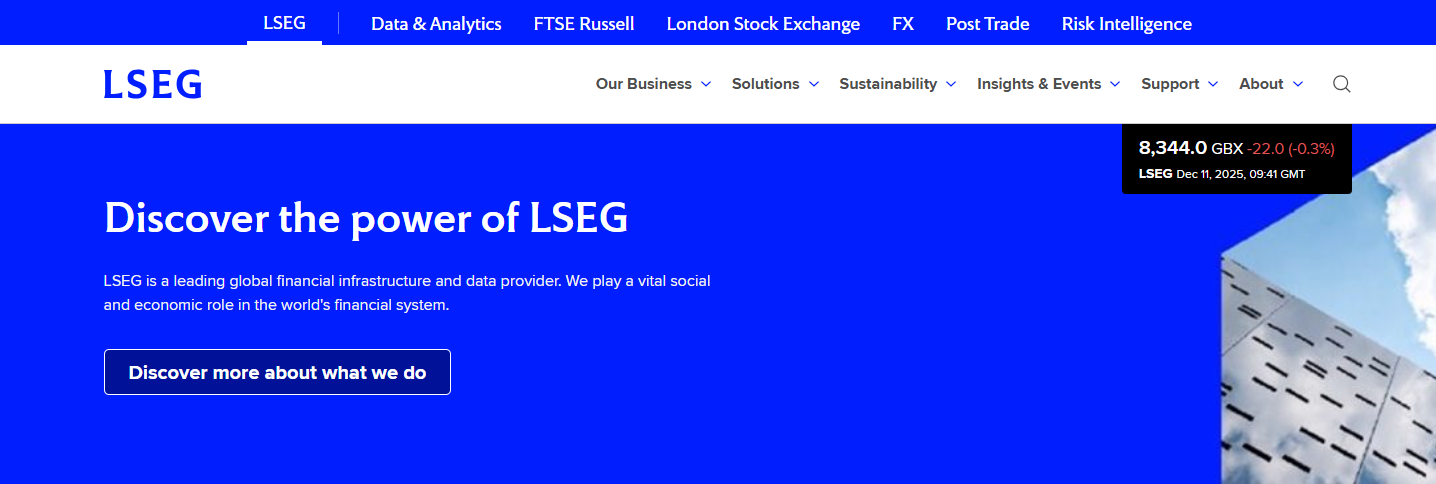
LSEG Refinitiv Eikon, now part of the London Stock Exchange Group (LSEG), is one of the world’s most powerful platforms for real-time market data, public company financials, trading analytics, commodities data, macroeconomic indicators, and news terminals.
Compared to Capital IQ, Eikon competes directly in the public markets, trading, and financial markets intelligence space, offering deeper coverage of real-time data feeds, foreign exchange, fixed income, commodities, and global macro information.
Eikon is widely used by investment banks, asset managers, hedge funds, traders, and market-facing financial institutions that require immediate market movements, sophisticated charting, and institutional-grade analytics.
Strengths
Real-time global market data and trading feeds
Eikon delivers live price updates, Level II data, FX rates, commodities pricing, fixed income curves, and global exchange feeds unmatched by most financial data platforms.
Exceptional public company financials and disclosures
The platform offers deep public market coverage, including full financial statements, fundamentals, analyst estimates, earnings guidance, and forecast models.
Integration with Reuters news and institutional research
Eikon includes real-time Reuters news, market intelligence, and exclusive institutional research streams—an advantage for market-moving analysis.
Advanced charting, analytics, and trading tools
The system provides advanced charting, scenario analysis, macro models, and trading analytics suitable for traders and portfolio managers.
Strong coverage of commodities, FX, and fixed income markets
LSEG dominates global commodities, derivatives, and foreign exchange data, making it ideal for firms with exposure to energy, metals, or global macro strategies.
Weaknesses
Very expensive, often costing significantly more than Capital IQ
Not designed for private company verification, UBOs, or compliance workflows
Licensing can be restrictive for redistribution or internal product embedding
Learning curve is steep due to the platform’s complexity
Not suitable for teams looking for registry-verified corporate data
Comparison Table: LSEG / Refinitiv Eikon vs Capital IQ
Category | LSEG / Refinitiv Eikon | Capital IQ |
|---|
Primary Focus | Real-time markets, trading, public companies | Public markets, financial modeling |
Market Data | Best-in-class live feeds | Delayed / non-terminal |
News & Research | Reuters integrated | S&P research + filings |
Private Company Data | Limited | Limited |
Ownership/UBO Data | Minimal | Basic |
Corporate Linkages | Limited | Basic |
Real-Time Analytics | Extensive | Moderate |
Licensing Flexibility | Restrictive | Restrictive |
Best For | Traders, hedge funds, asset managers | Investment banking, corporate finance |
Conclusion
LSEG Refinitiv Eikon is one of the strongest alternatives to Capital IQ for organizations that need real-time market data, public company analytics, and institutional research. It significantly outperforms Capital IQ in trading data, FX, commodities, macroeconomic modeling, and live market intelligence.
However, Eikon does not aim to solve private company coverage, UBO transparency, registry-verified data, or compliance-driven workflows—areas where other alternatives in this list (such as Global Database, Monetaiq, and Zephira.ai) provide far deeper capabilities.
Frequently Asked Questions About LSEG / Refinitiv Eikon as a Capital IQ Alternative
How does LSEG Refinitiv Eikon compare to Capital IQ for market data?
Eikon is far stronger for real-time market data, commodities pricing, FX rates, and trading analytics, whereas Capital IQ focuses on financial statements and public company research.
Does Eikon provide detailed private company or UBO information?
No. Eikon offers limited private company coverage and does not provide registry-verified data, ownership structures, or UBO mapping, which many teams now require.
Who typically uses LSEG / Refinitiv Eikon?
Eikon is used mainly by traders, investment banks, hedge funds, and asset managers who need real-time market intelligence and institutional research.
Is LSEG Refinitiv more expensive than Capital IQ?
Yes. Eikon generally has a higher price point because it includes live exchange feeds, institutional data, Reuters news, and trading tools.
Does Eikon integrate well with trading and portfolio management workflows?
Yes. It supports integrations with trading desks, risk systems, portfolio analytics, and workflow automation tools, making it suitable for market-facing financial teams.
3. Monetaiq — Best Capital IQ Alternative for Financial Data + Digital Intelligence
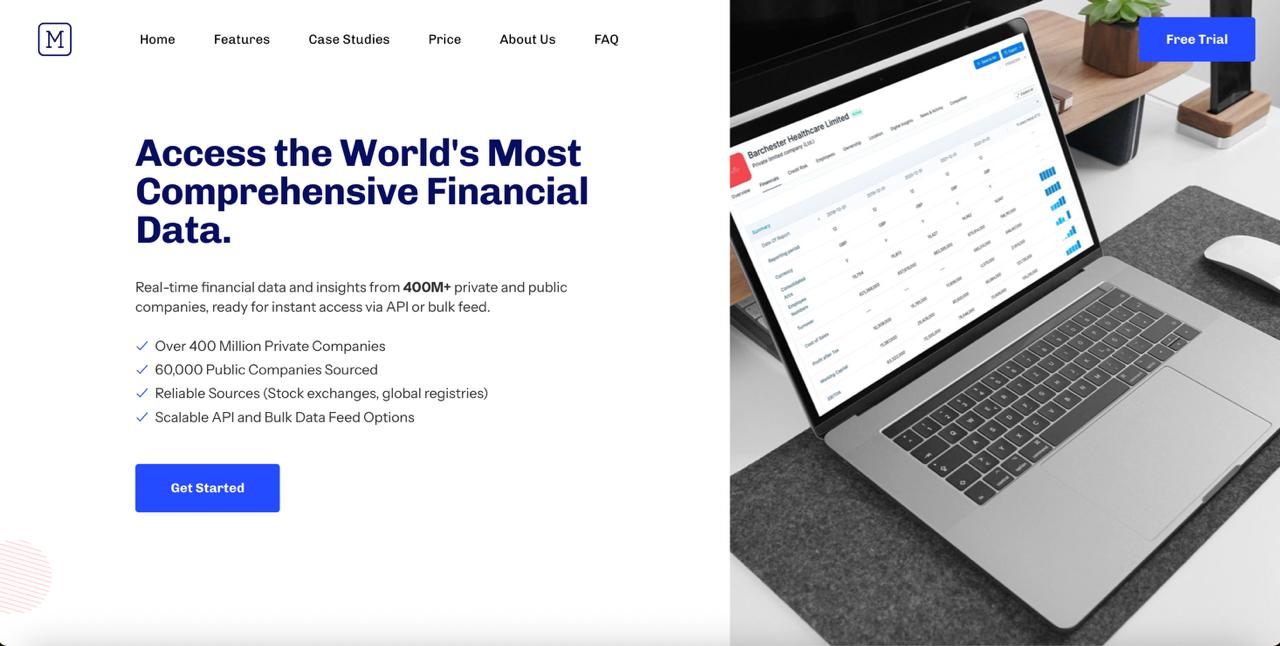
Monetaiq is a modern financial intelligence platform built for organizations that need multi-year financial statements, performance indicators, digital insights, website analytics, technology stack data, and corporate ownership structures within a single environment.
Unlike Capital IQ, which focuses primarily on public companies and analyst-driven research, Monetaiq is designed specifically for global private companies, combining financial data with digital performance metrics and registry-sourced ownership information. This approach provides a more complete picture of a company’s financial strength and online presence—an area where Capital IQ offers limited visibility.
Monetaiq consolidates 20+ years of financial history, industry benchmarks, digital signals, web traffic trends, ownership structures, and group linkages, making it valuable for investment analysis, competitive research, due diligence, procurement, and strategic planning.
Strengths
Deep historical financial data for global companies
Monetaiq provides multi-year financial statements for millions of companies, including revenue, profitability, liquidity, and long-term performance indicators.
Combines financial intelligence with digital insights
The platform integrates website analytics, traffic data, technology stack information, and digital performance signals to highlight online momentum and competitive strength.
Strong private company data coverage
Monetaiq offers detailed financial data on private companies across global markets, surpassing the private company depth available in Capital IQ.
Registry-linked ownership structures and group linkages
The platform includes corporate ownership data, shareholder structures, and group hierarchies sourced from official filings and registry information.
Useful for enrichment, research, and strategic decision-making
Monetaiq is used by investment teams, research analysts, GTM teams, and strategy units for evaluating financial performance, digital footprint, and corporate structure.
Weaknesses
Does not provide real-time market data, stock prices, or trading analytics
Lacks analyst reports, earnings transcripts, and sell-side research
Limited visibility into M&A transaction details compared to Capital IQ
Not designed for investment banking modeling workflows or terminal-style trading environments
Comparison Table: Monetaiq vs Capital IQ
Category | Monetaiq | Capital IQ |
|---|
Primary Focus | Private financials + digital insights | Public markets + analyst research |
Financial Statements | 20+ years, multi-country | Strong for public companies |
Private Company Coverage | Extensive | Limited |
Digital Signals | Yes (traffic, tech stack, analytics) | No |
Ownership / Group Structures | Yes — registry-linked | Partial |
M&A Coverage | Limited | Moderate |
Market Data | None | Partial |
Best For | Research, strategy, enrichment, risk review | Investment banking, modeling, equity research |
Conclusion
Monetaiq is a strong alternative to Capital IQ for organizations focused on private company financials, digital intelligence, and registry-linked ownership structures. Its combination of financial metrics, web analytics, and group linkage information offers insights that Capital IQ does not provide, particularly for understanding private market companies or evaluating online performance.
It is best suited for market research teams, investment analysts, strategy groups, procurement teams, and revenue operations that require a broad financial and digital profile of a company.
However, Monetaiq is not designed for real-time market workflows, public equity research, or investment banking-style modeling.
Frequently Asked Questions About Monetaiq as a Capital IQ Alternative
How does Monetaiq compare to Capital IQ for private company analysis?
Monetaiq offers deeper insight into private companies through financial history, digital metrics, and registry-linked ownership structures, whereas Capital IQ focuses more on public markets.
Does Monetaiq include website traffic or digital performance data?
Yes. Monetaiq integrates web traffic analytics, technology stack information, and digital activity signals, giving visibility into online presence and growth trends.
Can Monetaiq be used for competitive or industry analysis?
Yes. The platform includes benchmarking tools, industry trend tracking, and long-term financial comparisons ideal for competitive analysis and market research.
Does Monetaiq provide ownership structures or corporate group linkages?
Yes. Monetaiq includes registry-linked shareholder data and group structures, allowing users to understand corporate hierarchy and ownership.
Who benefits most from using Monetaiq?
Investment teams, strategy units, research analysts, procurement teams, and GTM leaders use Monetaiq to evaluate financial health, digital signals, and corporate structure.
4. FactSet — Best Capital IQ Alternative for Institutional-Grade Financial Research
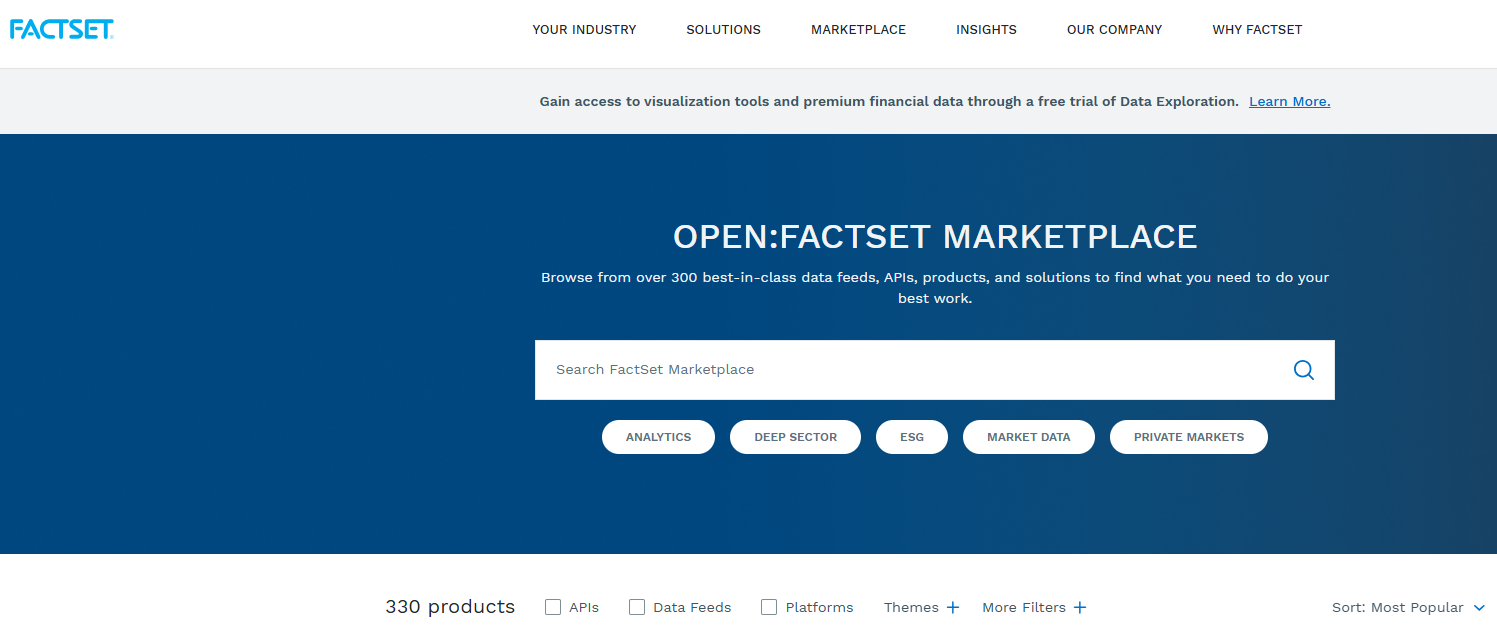
FactSet is one of the most established financial data platforms in the world, widely used by investment banks, asset managers, hedge funds, equity analysts, and institutional research teams. It competes directly with Capital IQ by offering deep financial datasets, analyst estimates, portfolio analytics, earnings models, research workflows, and detailed public company insights.
FactSet excels in public market intelligence, investment research, portfolio analysis, and quantitative modeling, making it one of the strongest alternatives to Capital IQ for users who need institutional-grade financial information and sophisticated analytics.
Strengths
Broad and detailed public company financial data
FactSet provides extensive public company statements, financial ratios, estimates, consensus forecasts, and long-term historical data.
Integrated research, news, and institutional analysis
Analysts gain access to proprietary research, broker estimates, earnings transcripts, and curated institutional insights.
Advanced analytics and portfolio management tools
The platform includes risk models, portfolio attribution, scenario analysis, factor modeling, and quantitative research tools.
Deep industry classification and sector intelligence
FactSet offers granular industry definitions, sector performance data, and thematic research ideal for investment and strategy teams.
Strong Excel add-ins and financial modeling support
Its Excel integration is widely considered one of the best in the industry, enabling sophisticated financial models and customizable workflows.
Weaknesses
Very expensive, often exceeding Capital IQ pricing
Limited private company coverage compared to registry-based platforms
No UBO transparency, registry-sourced ownership data, or deep corporate linkages
Not designed for compliance, KYB, or supply chain verification
Licensing restrictions make redistribution difficult
Comparison Table: FactSet vs Capital IQ
Category | FactSet | Capital IQ |
|---|
Public Company Coverage | Extensive | Extensive |
Private Company Data | Limited | Limited |
Analyst Estimates | Yes — strong | Yes |
Ownership/UBO Data | Minimal | Partial |
Portfolio & Risk Tools | Advanced | Moderate |
Market Data | Strong | Moderate |
Excel Modeling | Best-in-class | Strong |
Ideal For | Asset managers, banks, quant teams | Investment banking, research |
Conclusion
FactSet is one of the strongest Capital IQ alternatives for organizations that depend on public market financial analysis, equity modeling, and institutional research workflows. It offers exceptional analytics, advanced modeling tools, broker estimates, industry benchmarks, and portfolio management capabilities.
However, FactSet is not designed for registry-based private company verification, UBO transparency, KYB, procurement risk analysis, or ownership mapping. For teams requiring deep private company insights or global corporate structures, other platforms in this list will be more suitable.
Frequently Asked Questions About FactSet as a Capital IQ Alternative
How does FactSet compare to Capital IQ for financial analysis?
FactSet is widely considered superior for public company analytics, broker estimates, portfolio modeling, and research workflows, while Capital IQ offers strong financial screening and modeling templates.
Does FactSet have good private company coverage?
No. FactSet focuses primarily on public companies and does not provide registry-verified private company data, UBOs, or global corporate linkages.
Is FactSet more expensive than Capital IQ?
Yes. FactSet is typically priced at a premium due to its institutional datasets, research access, and advanced analytics tools.
Who uses FactSet?
FactSet is used heavily by asset managers, investment banks, hedge funds, traders, and equity research teams who require deep market intelligence.
Does FactSet support financial modeling?
Yes. FactSet’s Excel add-ins and modeling tools are among the most advanced in the industry, making it popular for valuation work and quantitative analysis.
5. PitchBook — Best Capital IQ Alternative for VC, PE, and Private Market Deal Intelligence
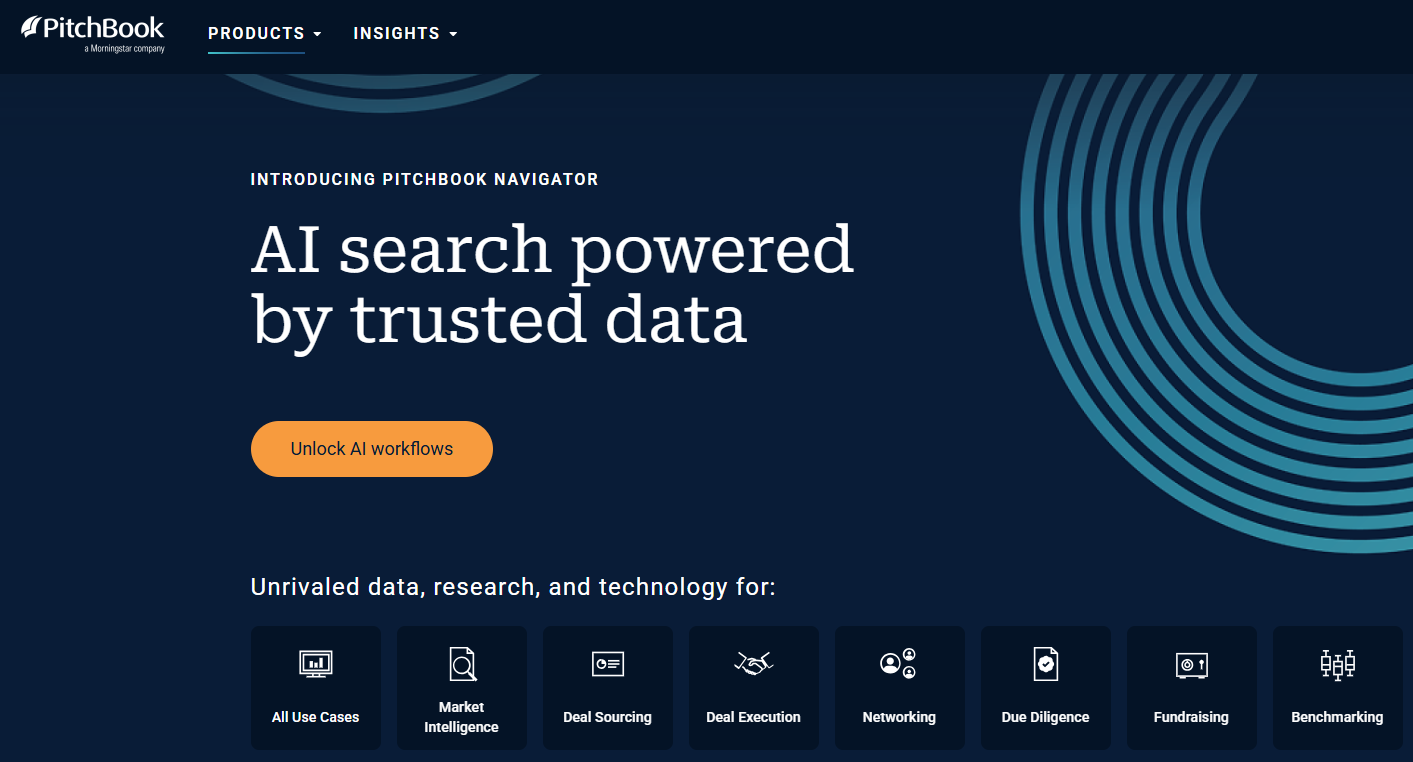
PitchBook is one of the leading platforms for private market intelligence, specializing in venture capital, private equity, M&A transactions, fund performance, investor profiles, and deal flow analysis.
It is widely used by VC firms, PE funds, investment banks, corporate development teams, and market intelligence analysts who require deep insight into private deals, funding rounds, valuations, and investor relationships.
While Capital IQ offers some private market data, PitchBook provides significantly richer details on startups, private equity portfolios, deal terms, exits, growth-stage metrics, and investor networks, making it a strong alternative for teams focused on private markets.
Strengths
Market-leading private equity and venture capital coverage
PitchBook is known for its extensive database of VC rounds, PE deals, valuations, exits, investors, and portfolio companies.
Detailed deal terms and transaction histories
Users can access information on deal structures, valuations, multiples, funding rounds, and liquidity events—areas where Capital IQ has limited depth.
Comprehensive investor and fund intelligence
The platform maps GPs, LPs, fund strategies, fund performance metrics, investor preferences, and co-investor relationships.
Strong startup and scale-up coverage across global markets
PitchBook tracks early-stage companies, high-growth startups, and emerging technology trends with more detail than Capital IQ.
Useful for M&A research, fundraising, and corporate development
Corporate development teams rely on PitchBook for identifying acquisition targets, understanding competitive landscapes, and analyzing deal flow.
Weaknesses
Limited financial statement depth compared to Capital IQ
No registry-sourced UBO data or formal corporate ownership structures
Less suitable for compliance, KYB, risk, and supplier verification
Does not provide real-time market data or trading information
Premium pricing makes it expensive for smaller firms
Comparison Table: PitchBook vs Capital IQ
Category | PitchBook | Capital IQ |
|---|
Primary Focus | VC, PE, M&A, private market deals | Public companies + financial modeling |
Deal Coverage | Extensive | Moderate |
Startup Data | Strong | Limited |
Financial Statements | Limited | Strong |
Ownership/UBOs | Minimal | Partial |
Market Data | None | Partial |
Investor Intelligence | Very strong | Moderate |
Best For | VC, PE, M&A, corp dev | IB, research, modeling |
Conclusion
PitchBook is one of the best Capital IQ alternatives for firms operating in venture capital, private equity, market intelligence, and corporate development. It provides unmatched insights into private companies, funding rounds, deal structures, investor relationships, fund strategies, and valuation trends.
However, PitchBook is not designed for registry-level ownership research, UBO discovery, corporate linkages, financial compliance, or KYB use cases. It is also not a replacement for public market analytics or modeling tools found in Capital IQ.
For private market deal intelligence, PitchBook is highly effective, but for global company registry data or compliance workflows, other platforms in this list are more suitable.
Frequently Asked Questions About PitchBook as a Capital IQ Alternative
Is PitchBook better than Capital IQ for private market data?
Yes. PitchBook offers deeper insight into VC deals, PE transactions, valuations, and investor relationships, whereas Capital IQ focuses more on public market fundamentals.
Does PitchBook include startup and early-stage company data?
Yes. It is one of the strongest platforms for tracking startups, scale-ups, technology companies, and funding activity across global markets.
Can PitchBook be used for M&A research and deal sourcing?
Absolutely. PitchBook provides extensive deal histories, comparable transactions, buyer profiles, and market intelligence ideal for M&A teams.
Does PitchBook include financial statements or UBO data?
PitchBook provides limited financials and does not include registry-sourced UBOs, ownership structures, or corporate linkages.
Who benefits most from using PitchBook?
VC firms, PE funds, investment banks, corporate development teams, and strategy units that rely on private market insights, valuations, and deal intelligence.
6. Aladdin (BlackRock) — Best Capital IQ Alternative for Risk Management & Portfolio Analytics

BlackRock Aladdin is one of the most advanced platforms in the world for portfolio management, enterprise risk analytics, stress testing, and institutional investment workflows.
Built originally for BlackRock’s internal investment teams, Aladdin is now widely used by asset managers, pension funds, insurers, banks, sovereign wealth funds, and large corporates that require precision-level risk modeling and portfolio oversight.
While Capital IQ focuses on financial data, screening, and valuation, Aladdin excels in multi-asset portfolio risk, scenario analysis, climate modeling, liquidity risk, and operational risk dashboards—making it a very different but highly complementary alternative.
Strengths
World-class risk and portfolio analytics
Aladdin delivers sophisticated models for market risk, credit risk, liquidity risk, scenario testing, and factor modeling across multi-asset portfolios.
Enterprise-grade portfolio management platform
It integrates trading, compliance, risk, and performance workflows into one system, used by some of the world’s largest asset managers.
Strong market data and stress-testing capabilities
Aladdin provides macroeconomic scenarios, historical simulations, shocks, and sensitivity models far beyond what Capital IQ offers.
Built for large-scale investment operations
The platform supports full front-to-back investment workflows, including trade execution, compliance checks, and daily NAV oversight.
Climate, ESG, and sustainability risk modeling
Aladdin Climate integrates environmental and transition risk analytics, which are increasingly required by regulators and large institutions.
Weaknesses
Extremely expensive and inaccessible for smaller organizations
Not designed for private company research, registry data, UBOs, or compliance workflows
No detailed private financial statements or corporate linkages
Requires extensive onboarding and training due to system complexity
Not a replacement for company intelligence platforms used in research or due diligence
Comparison Table: Aladdin vs Capital IQ
Category | BlackRock Aladdin | Capital IQ |
|---|
Primary Focus | Risk + portfolio analytics | Financials + screening |
Public Company Data | Moderate | Strong |
Private Company Data | Minimal | Limited |
Portfolio Tools | Best-in-class | Basic |
Risk Models | Advanced | Moderate |
Ownership/UBOs | No | Partial |
Market Data | Strong | Moderate |
Best For | Asset managers, large institutions | IB, research, corporate finance |
Conclusion
BlackRock Aladdin is the strongest Capital IQ alternative for portfolio management, risk analytics, and institutional investment workflows. It brings unmatched capabilities in scenario analysis, factor modeling, climate risk, liquidity forecasting, and multi-asset risk attribution.
However, Aladdin is not designed for private company intelligence, UBO discovery, corporate linkages, registry sourcing, financial enrichment, or deal research.
It is a deeply specialized platform best suited for large financial institutions, not teams needing corporate intelligence or company-level data.
For risk and portfolio analytics, Aladdin outperforms nearly every competitor—but for company data, Capital IQ alternatives like Global Database, Monetaiq, FactSet, or Zephira.ai are far more appropriate.
Frequently Asked Questions About BlackRock Aladdin as a Capital IQ Alternative
Is Aladdin a true replacement for Capital IQ?
Not entirely. Aladdin specializes in portfolio and risk analytics, while Capital IQ focuses on company data, screening, and financial modeling.
Who typically uses BlackRock Aladdin?
Large asset managers, pension funds, banks, insurers, sovereign wealth funds, and enterprise investment teams that require institutional-grade risk management.
Does Aladdin include private company or UBO information?
No. Aladdin is not designed for private company coverage, registry data, ownership structures, or UBO mapping.
Is Aladdin more expensive than Capital IQ?
Yes. Aladdin is significantly more expensive due to its scale, integration capabilities, and advanced risk analytics models.
What is Aladdin best used for?
Risk modeling, portfolio oversight, performance attribution, stress testing, climate risk analysis, and enterprise investment operations.
7. Zephira.ai — Best Capital IQ Alternative for API-First Company Data & KYB Automation
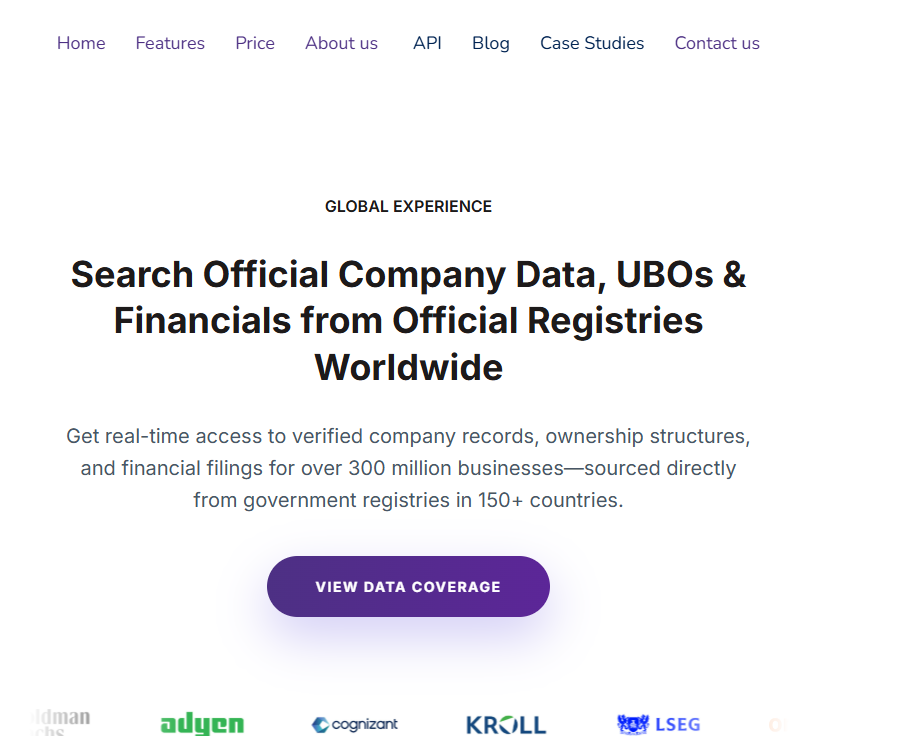
Zephira.ai is a developer-first API platform offering real-time access to company registry data, UBO structures, corporate hierarchies, tax IDs, and financial disclosures from more than 100 official government sources.
Unlike Capital IQ—which is built for analysts and research teams—Zephira.ai is designed for product teams, engineers, RegTech platforms, fintechs, and B2B applications that need accurate, real-time company data delivered through a modern API.
Zephira.ai focuses heavily on legal entity verification (KYB), UBO identification, compliance automation, onboarding flows, fraud prevention, and corporate identity resolution, making it a highly technical and flexible alternative to Capital IQ for developer-led organizations.
Strengths
Developer-first API for global registry data
Zephira.ai provides clean, normalized API access to company registry data, legal identifiers, tax numbers, statuses, and filings from 100+ official registries.
Real-time KYB and entity verification
The platform allows users to verify legal entities instantly using government-sourced data—ideal for onboarding, AML workflows, and automated compliance.
Deep UBO and shareholder mapping
Zephira.ai identifies both direct and indirect ownership structures, tracing control relationships and natural-person UBOs where legally disclosed.
Corporate group structures and linkages
The API includes multi-level parent–subsidiary hierarchies, cross-border ownership, and linkage data built from registry filings, not scraped sources.
High-performance API built for product integration
Zephira.ai is designed for engineers who need reliable uptime, fast response times, usage-based pricing, and flexible integration into apps, onboarding systems, and risk engines.
Weaknesses
Not designed for public company modeling, equity analysis, or analyst research
Does not include investor intelligence, deal terms, or VC/PE transaction data
No portfolio analytics, trading tools, or market data
Requires engineering resources to implement and maintain
Not suitable for investment banking workflows or financial modeling in Excel
Comparison Table: Zephira.ai vs Capital IQ
Category | Zephira.ai | Capital IQ |
|---|
Data Delivery | API-first, real-time | Web platform + Excel |
Private Company Depth | Strong (registry-sourced) | Limited |
Ownership / UBO Data | Deep, cross-border | Partial |
Group Structures | Yes — multi-level | Basic |
KYB Verification | Yes — real-time | No |
Public Market Data | None | Strong |
Market Intelligence | Limited | Strong |
Best For | Fintechs, RegTech, onboarding, compliance | IB, research, valuations |
Conclusion
Zephira.ai is the leading Capital IQ alternative for API-driven company verification, KYB checks, UBO identification, and registry-based entity intelligence.
Its real-time API, deep ownership structures, and global registry integrations make it ideal for teams building compliance tools, onboarding automation, risk engines, and identity verification flows.
However, Zephira.ai is not designed for analysts, researchers, or investment bankers who rely on public market data, modeling tools, or financial research reports.
For developer-first use cases—especially in fintech, payments, RegTech, marketplaces, procurement systems, and onboarding platforms—Zephira.ai is one of the most flexible and powerful options.
Frequently Asked Questions About Zephira.ai as a Capital IQ Alternative
How is Zephira.ai different from Capital IQ?
Zephira.ai focuses on real-time registry data, KYB verification, UBO structures, and API-driven entity intelligence, while Capital IQ centers on financial modeling and public markets.
Does Zephira.ai provide ownership and UBO information?
Yes. Zephira.ai offers detailed shareholder structures and natural-person UBO identification across multiple jurisdictions.
Can Zephira.ai be used for onboarding and KYB automation?
Yes. It is built specifically for automated KYB, AML workflows, fraud prevention, and legal entity verification.
Does Zephira.ai include public market data or analyst research?
No. Zephira.ai focuses on registry data and legal entity intelligence, not public company equity research or market data.
What types of companies use Zephira.ai?
Fintechs, RegTech platforms, banks, onboarding tools, B2B marketplaces, payment providers, and enterprise compliance teams use Zephira.ai for entity verification and ownership transparency.
8. Dun & Bradstreet — Best Capital IQ Alternative for Business Credit, Risk Scores & Commercial Data
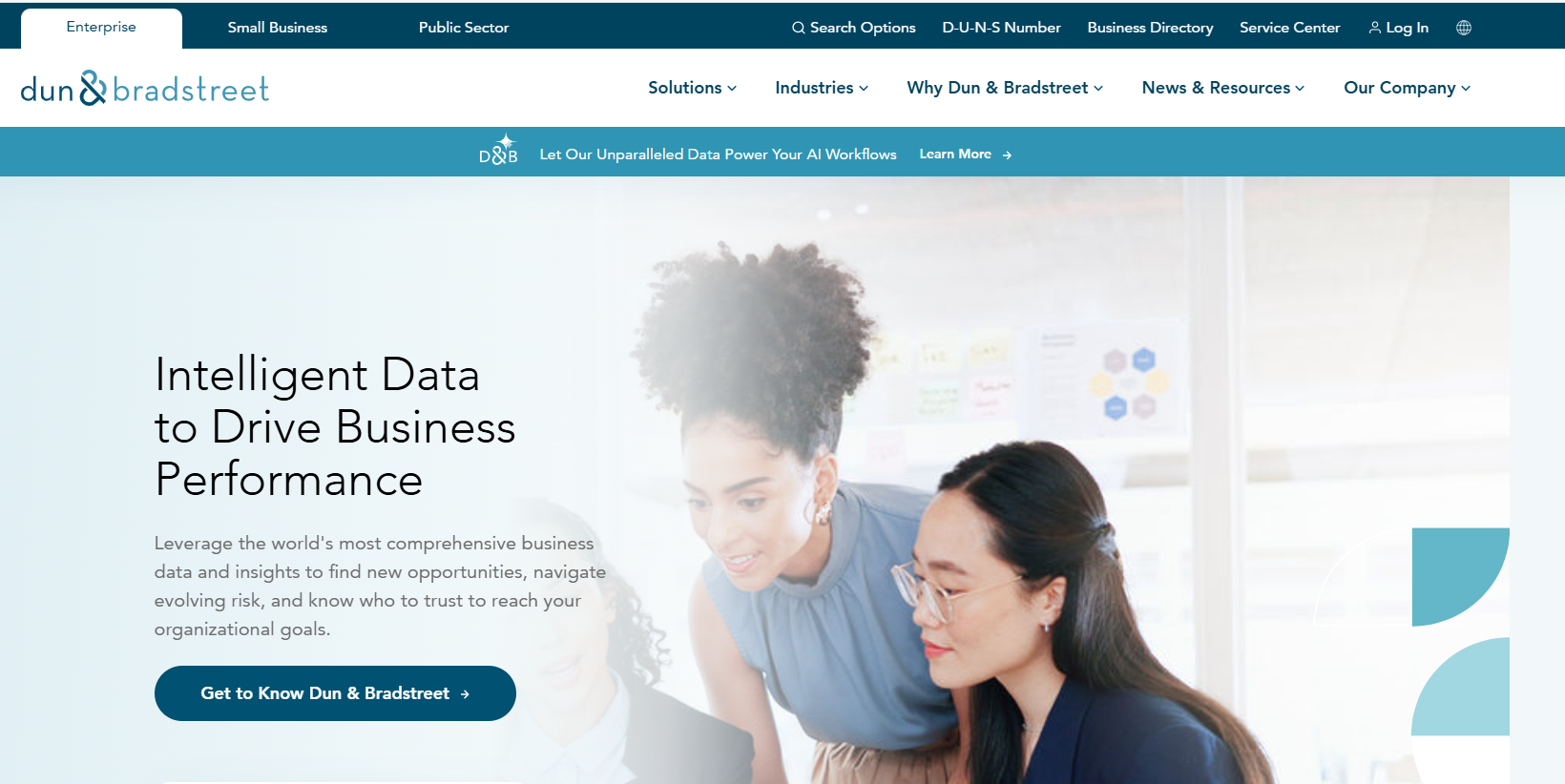
Dun & Bradstreet (D&B) is one of the oldest and most recognized commercial data providers in the world, widely used for business credit risk assessment, supplier verification, compliance checks, and enterprise data enrichment.
Its proprietary D-U-N-S® Number system is a global standard for company identifiers, making D&B deeply embedded in procurement, financial institutions, and supply chain workflows.
While Capital IQ is focused on financial analysis and public markets, D&B excels in credit scoring, risk modeling, and operational due diligence, making it a strong alternative for teams that need business verification rather than investment analytics.
Strengths
Global standard for company identification (D-U-N-S® Number)
D&B’s unique identifier is widely used in procurement, credit decisioning, and multinational supplier programs.
Strong credit risk models and predictive scoring
D&B offers long-established business credit scores, failure risk predictions, payment behavior insights, and supplier risk indicators.
Large global business database
D&B covers millions of companies worldwide, with strong presence in North America, Europe, and major enterprise markets.
Widely used in enterprise supply chain and compliance workflows
Global enterprises rely on D&B for vendor vetting, sanctions checks, credit decisions, and risk monitoring.
Deep integrations with ERP and enterprise systems
D&B integrates with SAP, Oracle, Microsoft Dynamics, Salesforce, and other enterprise platforms.
Weaknesses
Data licensing is highly restrictive, especially for redistribution or reselling
Heavy dependence on third-party data partners in many markets
Limited transparency around source origins compared to registry-based providers
Weaker global coverage in early-stage companies and emerging markets
Limited UBO data and incomplete corporate ownership structures
Comparison Table: Dun & Bradstreet vs Capital IQ
Category | Dun & Bradstreet | Capital IQ |
|---|
Primary Focus | Business credit + risk | Financial modeling + public markets |
Company Identifier | D-U-N-S® Number | Ticker / CIK |
Private Company Data | Moderate | Limited |
Credit Scores | Strong | None |
Ownership/UBOs | Limited | Partial |
Source Transparency | Low | Moderate |
Reseller Rights | Strict | Strict |
Best For | Credit teams, procurement, risk | IB, corporate finance |
Conclusion
Dun & Bradstreet is an established alternative to Capital IQ for organizations needing business credit risk insights, global identifiers, and vendor verification.
Its credit scoring models, payment behavior data, and enterprise integrations make it ideal for procurement, risk teams, banking compliance, and supplier onboarding.
However, D&B’s major limitations include strict licensing, limited source transparency, and reliance on data partners in many regions. It also lacks deep registry-based ownership, corporate linkages, and comprehensive UBO data.
For credit and supplier risk workflows, D&B is effective. For transparent registry-sourced intelligence, corporate structures, or UBO mapping, other alternatives on this list—such as Global Database or Zephira.ai—offer more depth.
Frequently Asked Questions About Dun & Bradstreet as a Capital IQ Alternative
How does Dun & Bradstreet compare to Capital IQ for credit risk analysis?
Dun & Bradstreet is significantly stronger for business credit reports, payment behavior analysis, default risk scores, and supplier risk indicators, while Capital IQ is focused on financial modeling and public market research.
Does Dun & Bradstreet provide reliable ownership or UBO information?
D&B provides some ownership data, but it does not offer registry-verified UBOs or detailed corporate structures, which makes it less suitable for regulatory compliance or complex group linkage analysis.
Why are Dun & Bradstreet’s data licensing terms considered restrictive?
D&B licenses usually limit redistribution, product embedding, and derivative data usage, making it difficult for companies to incorporate D&B data into customer-facing tools or internal products.
Is Dun & Bradstreet transparent about its data sources?
Not fully. Much of D&B’s information comes from third-party data partners, and it does not offer attribute-level source citations. Platforms that source directly from government registries provide better transparency.
Which teams benefit the most from using Dun & Bradstreet?
D&B is ideal for credit teams, procurement departments, supply chain managers, and banking compliance units that need credit scores, vendor vetting, and risk monitoring—rather than financial modeling or market analysis.
9. Crunchbase — Best Capital IQ Alternative for Startup Data & Early-Stage Company Discovery
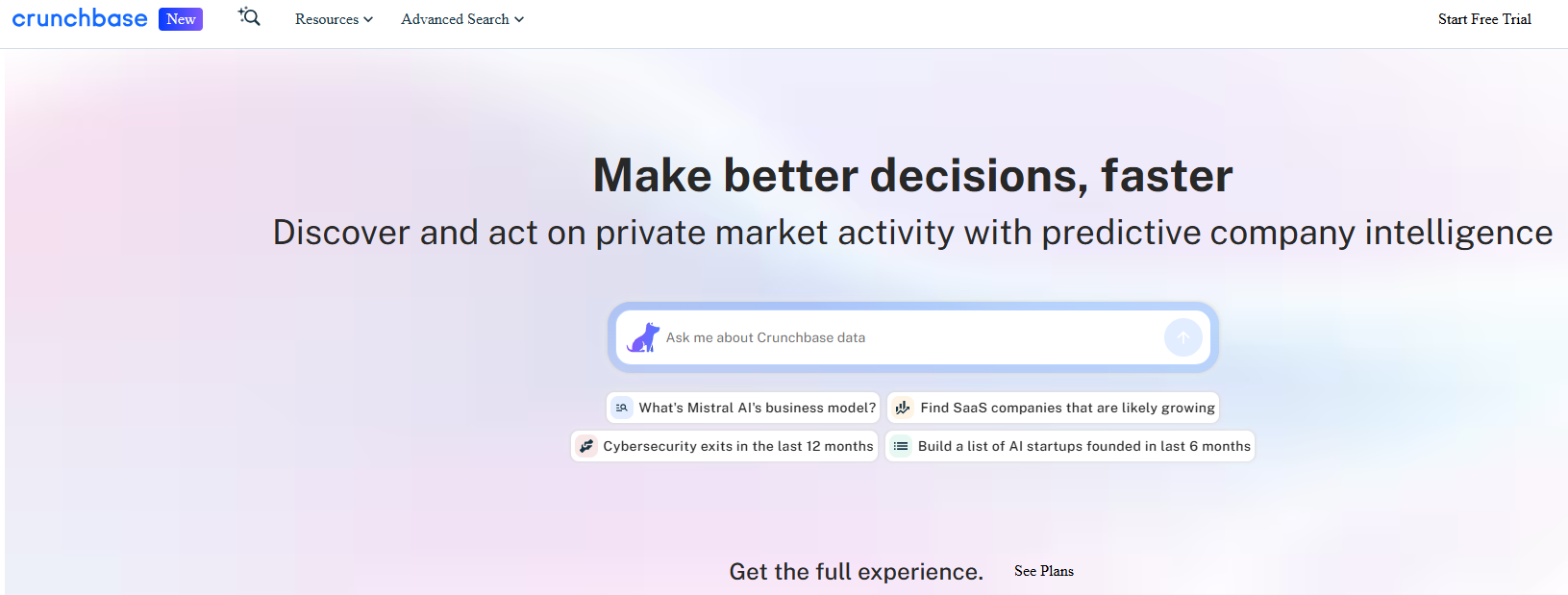
Crunchbase is one of the most widely used platforms for startup insights, early-stage company discovery, funding rounds, and founder information.
Known for its community-driven data model, Crunchbase is particularly strong for identifying emerging companies, tracking funding activity, and discovering high-growth startups before they appear on more traditional financial platforms like Capital IQ.
While Capital IQ focuses heavily on public companies and financial modeling, Crunchbase excels in early-stage company visibility, making it a useful alternative for sales teams, recruiters, VCs, and analysts looking for fast-growing startup activity.
Strengths
Excellent visibility into startups and emerging companies
Crunchbase is widely used to track new founders, young companies, seed rounds, accelerators, and early-stage innovation.
Strong funding round and investment activity coverage
The platform highlights investors, funding amounts, lead partners, and round history across global startup ecosystems.
Easy-to-use interface and fast company discovery
Crunchbase’s user-friendly search tools make it simple to filter companies by industry, growth, funding, or location.
Useful for sales intelligence and prospecting
Sales teams use Crunchbase to find fast-growing companies and identify accounts likely to be expanding or hiring.
Affordable and accessible
Unlike Capital IQ or PitchBook, Crunchbase offers budget-friendly plans suitable for smaller teams and individual users.
Weaknesses
Relies heavily on user-submitted data, meaning accuracy can vary
Limited financial statement depth compared to Capital IQ
No UBO data, registry-sourced company information, or corporate linkages
Weak coverage of mature mid-market and enterprise companies
No market data, analyst research, or valuation tools
Comparison Table: Crunchbase vs Capital IQ
Category | Crunchbase | Capital IQ |
|---|
Primary Focus | Startups + funding activity | Public companies + financial research |
Startup Coverage | Very strong | Limited |
Funding Round Data | Good | Moderate |
Private Company Depth | Limited | Limited |
Financial Statements | Minimal | Strong |
Ownership/UBOs | None | Partial |
Market Data | None | Strong |
Best For | Startups, sales teams, recruiters | IB, equity research, valuation |
Conclusion
Crunchbase is one of the best Capital IQ alternatives for identifying startups, fast-growing companies, founders, and funding activity. It’s ideal for sales teams seeking high-growth targets, recruiters looking for hiring signals, and early-stage investors scouting new opportunities.
However, Crunchbase is not designed for due diligence, financial modeling, UBO discovery, registry verification, or deep corporate structures. For those workflows, platforms like Global Database, Zephira.ai, or Monetaiq provide more reliable and structured intelligence.
Crunchbase excels at startup discovery, but it does not replace Capital IQ for financial analysis or public company research.
Frequently Asked Questions About Crunchbase as a Capital IQ Alternative
Is Crunchbase better than Capital IQ for startup data?
Yes. Crunchbase provides significantly better coverage of startups, early-stage companies, and seed/Series funding, making it stronger for startup discovery.
Does Crunchbase offer financial statements or valuation data?
No. Crunchbase focuses on funding activity and company profiles, not financial statements, public filings, or financial ratios.
How accurate is Crunchbase data compared to Capital IQ?
Crunchbase relies heavily on user-submitted and self-reported data, which may be less accurate than the structured financial data found in Capital IQ.
Does Crunchbase include UBO information or legal ownership structures?
No. Crunchbase does not provide ownership hierarchies, UBO data, or registry-sourced corporate structures.
Who uses Crunchbase the most?
Sales teams, recruiters, startup scouts, early-stage investors, and GTM teams use Crunchbase to identify fast-growing prospects and funding activity.
10. Morningstar Direct — Best Capital IQ Alternative for Fund Analysis, ESG Data & Investment Research
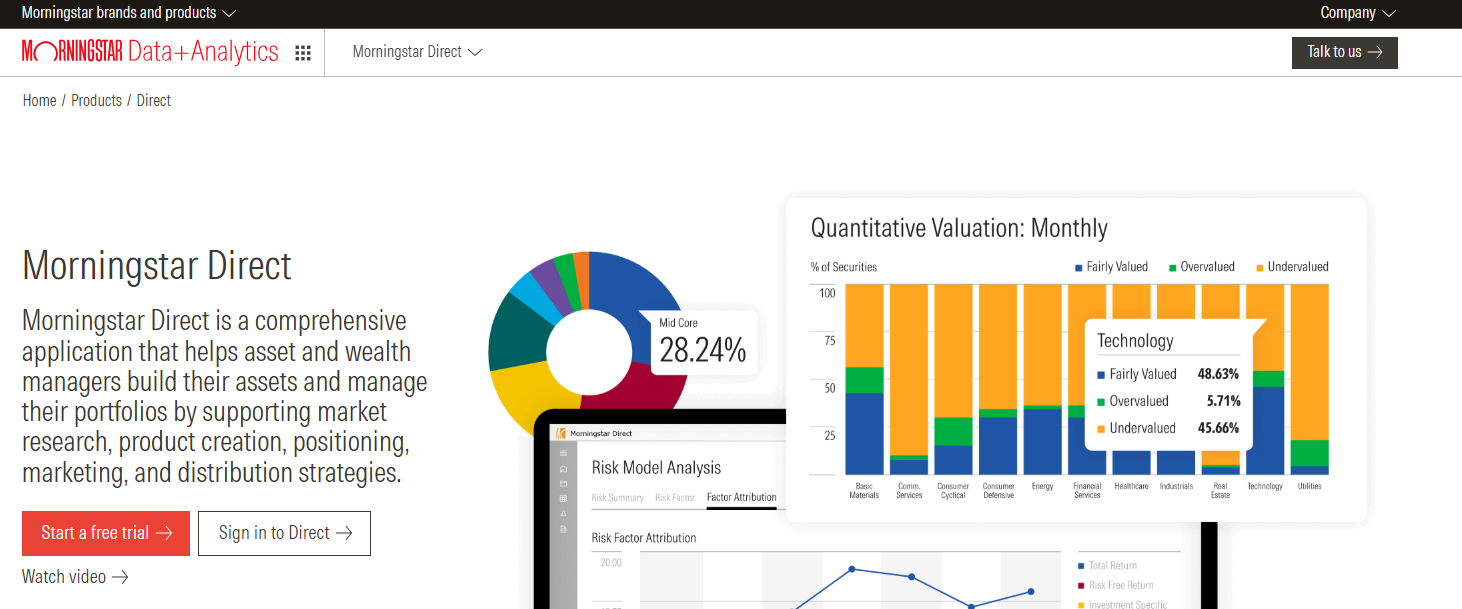
Morningstar Direct is a leading investment research and fund analytics platform used by asset managers, wealth managers, financial advisors, pension funds, insurers, and institutional investment teams.
While Capital IQ focuses on company financials and public market ratios, Morningstar Direct specializes in mutual funds, ETFs, managed portfolios, ESG metrics, sustainability ratings, factor exposure, and performance attribution.
Morningstar is widely known for its fund ratings, style boxes, risk-adjusted performance metrics, and comprehensive coverage of investment products, making it a top alternative for teams focused on portfolio construction and fund selection rather than corporate financial modeling.
Strengths
Market-leading fund and ETF analytics
Morningstar offers one of the deepest databases of mutual funds, ETFs, model portfolios, and managed products worldwide.
Robust ESG, sustainability, and stewardship datasets
The platform includes environmental, social, and governance metrics, impact data, sustainability ratings, and carbon exposure analysis—areas where Capital IQ lacks depth.
Strong performance, risk, and factor analytics
Users gain access to performance attribution, factor breakdowns, style analysis, volatility measures, and long-term risk-adjusted returns.
Morningstar ratings and proprietary methodologies
The well-known Morningstar Rating™ (star rating), Analyst Rating, and Sustainability Rating are widely trusted across the investment industry.
Ideal for portfolio research and fund due diligence
Morningstar Direct is frequently used to build portfolios, compare funds, analyze managers, and evaluate diversification strategies.
Weaknesses
Not designed for private company research, financial statements, or transaction analysis
Limited corporate ownership, UBO data, or registry-based structures
No deal flow, VC/PE insights, or corporate development data
Lacks terminal-style real-time market data found in platforms like Eikon
Not suitable for investment banking or valuation modeling workflows
Comparison Table: Morningstar Direct vs Capital IQ
Category | Morningstar Direct | Capital IQ |
|---|
Primary Focus | Funds, ETFs, ESG research | Company financials + modeling |
Fund Coverage | Extensive | Limited |
ESG Data | Strong | Moderate |
Private Company Data | Very limited | Limited |
Financial Statements | Weak | Strong |
Market Data | Moderate | Moderate |
Portfolio Tools | Advanced | Basic |
Best For | Asset managers, wealth teams | IB, corporate finance |
Conclusion
Morningstar Direct is a top Capital IQ alternative for organizations focused on fund analytics, ESG research, manager evaluation, and portfolio construction.
Its industry-leading coverage of mutual funds, ETFs, managed portfolios, and sustainability metrics makes it ideal for investment firms that prioritize product selection and long-term performance evaluation.
However, Morningstar Direct is not suitable for private company intelligence, registry-based entity information, UBO discovery, deal flow analysis, or corporate financial modeling—areas where other platforms in this list, such as Global Database, Zephira.ai, and PitchBook, excel.
Morningstar is best viewed as a portfolio and fund analytics powerhouse, complementary to but distinct from Capital IQ.
Frequently Asked Questions About Morningstar Direct as a Capital IQ Alternative
Is Morningstar Direct a good replacement for Capital IQ?
It depends on the use case. Morningstar is excellent for fund analytics, ESG data, and portfolio research, while Capital IQ is better for financial statements, company screening, and valuation work.
Does Morningstar Direct cover private company financials or ownership structures?
No. Morningstar focuses on investment products (funds, ETFs, portfolio strategies) and offers very limited private company data.
Who typically uses Morningstar Direct?
Asset managers, financial advisors, portfolio analysts, wealth managers, and pension funds use it for fund research, manager evaluation, and portfolio construction.
Does Morningstar provide real-time market data?
Morningstar provides some market data, but it does not offer terminal-grade real-time feeds like LSEG Eikon or Bloomberg.
What is Morningstar's biggest advantage over Capital IQ?
Morningstar excels in fund performance analysis, ESG ratings, and portfolio analytics, areas where Capital IQ’s coverage is limited.
Final Summary: Best Capital IQ Competitors & Alternatives Compared
Choosing the right Capital IQ alternative depends entirely on your use case, data needs, and team workflows.
Each platform in this top-10 list fills a different gap left by Capital IQ—whether it’s private company depth, registry-verified data, fund analytics, real-time markets, or API-first delivery.
Below is a consolidated summary of where each alternative excels:
Global Database — Best for Registry-Sourced Company Data & UBOs
Ideal for teams needing 600M+ company profiles, deep UBO structures, 378M+ corporate linkages, financial statements, and attribute-level source transparency across 200 countries.
LSEG Refinitiv (Eikon) — Best for Real-Time Market Data
The strongest replacement when you need live market feeds, commodities, FX, and institutional-grade trading analytics.
Monetaiq — Best for Private Company Financials + Digital Insights
Combines 20+ years of financial data, website analytics, digital signals, and registry-linked ownership—ideal for market research and strategic planning.
FactSet — Best for Institutional Investment Research
Delivers deep public company fundamentals, broker estimates, factor models, and industry-level analytics.
PitchBook — Best for VC, PE, and Deal Intelligence
Leading platform for startup data, valuations, funding rounds, investors, and private market transactions.
BlackRock Aladdin — Best for Risk & Portfolio Management
Unmatched in multi-asset risk modeling, climate analytics, stress testing, and enterprise investment workflows.
Zephira.ai — Best API-First Platform for KYB, Registry Data & UBOs
Designed for developers and fintechs needing real-time registry data, ownership structures, and automated KYB checks via API.
Dun & Bradstreet — Best for Business Credit & Supplier Risk
A legacy provider specializing in credit scores, payment behavior, vendor risk, and enterprise supply-chain workflows.
Crunchbase — Best for Startup Discovery & Early-Stage Intelligence
Strong for tracking startups, founders, funding rounds, and emerging companies in early stages.
Morningstar Direct — Best for Fund, ETF & ESG Analytics
Leading platform for fund research, ESG metrics, portfolio construction, and manager evaluation.
Which Capital IQ Alternative Should You Choose?
Here is the high-level recommendation framework:
Choose Global Database if you need:
Registry-sourced data, private companies, UBOs, corporate structures, compliance, or enrichment.
Choose LSEG / Eikon if you need:
Real-time markets, commodities, FX, or institutional trading.
Choose Monetaiq if you need:
Private company financials + digital signals in one platform.
Choose FactSet if you need:
Deep public company research, models, and institutional analytics.
Choose PitchBook if you need:
VC/PE data, deal terms, valuations, and investor networks.
Choose Aladdin if you need:
Risk modeling, portfolio analytics, and enterprise investment workflows.
Choose Zephira.ai if you need:
API-first registry data, KYB checks, or UBO mapping.
Choose Dun & Bradstreet if you need:
Credit scores, payment behavior, supplier risk.
Choose Crunchbase if you need:
Startup discovery, early funding signals, founder data.
Choose Morningstar Direct if you need:
Fund analysis, ETFs, sustainability ratings, and portfolio research.
Final Thought
There is no single “best” Capital IQ alternative—only the best match for your business model, data requirements, and integration needs.
This list gives you a complete overview of the market so you can select the right combination of tools to complement or replace Capital IQ in 2026.
Global Frequently Asked Questions About Capital IQ Competitors & Alternatives
Which Capital IQ alternative has the best private company coverage?
Global Database, Monetaiq, and Zephira.ai provide deeper global private company intelligence than Capital IQ, including registry-verified data, financials, ownership structures, UBOs, and corporate linkages.
What is the best replacement for Capital IQ if I need real-time market data?
LSEG Refinitiv (Eikon) is the strongest choice for real-time prices, commodities, FX, fixed income, macro data, and institutional trading analytics.
Which competitor is best for venture capital, private equity, and deal flow?
PitchBook offers industry-leading data on VC rounds, PE deals, valuations, exits, investors, and fund performance.
Which Capital IQ alternative offers the most transparent and verifiable company data?
Global Database and Zephira.ai provide registry-sourced data with attribute-level source disclosure, UBO mapping, and multi-level corporate structures.
Are there Capital IQ alternatives with more flexible licensing options?
Yes. Global Database and Zephira.ai offer significantly more flexible licensing for embedding data, building derivative products, or using data across internal systems.
What is the closest match to Capital IQ for financial modeling and analyst workflows?
FactSet is the strongest option for equity research, broker estimates, consensus data, and advanced financial modeling in Excel.
Which Capital IQ competitor is best for credit scoring and supplier risk?
Dun & Bradstreet remains the most widely used platform for business credit reports, payment history, default risk indicators, and vendor risk assessments.
What is the best alternative for startup intelligence and early-stage company tracking?
Crunchbase is ideal for discovering startups, monitoring seed-to-Series funding rounds, and identifying high-growth early-stage companies.
Which platform surpasses Capital IQ for fund, ETF, and ESG research?
Morningstar Direct provides industry-leading analytics for funds, ETFs, manager performance, and sustainability metrics.
What is the strongest Capital IQ alternative for KYB, UBO checks, and compliance automation?
Zephira.ai and Global Database offer real-time registry data, UBO visibility, and KYB/AML-ready entity verification through APIs or dashboards.
Which competitor offers digital insights, website analytics, and online performance indicators?
Monetaiq is the only alternative combining financial statements + digital intelligence (traffic, tech stack, growth signals).
Can any platform fully replace Capital IQ’s public market coverage?
The closest equivalents are:
FactSet — for public company fundamentals and forecasts
LSEG Refinitiv (Eikon) — for real-time markets and trading data
Together, they cover nearly all public-market workflows Capital IQ supports.
[[form]]
![Top 10 Capital IQ Competitors & Alternatives for 2026 [Ranked]](https://minio.ebs.io/cms-ebsio-prod/285fae9184424f63aba1be6cd16c573d/2025/12/11/capital_iq_competitors-406a5efe-d3d4-4a22-8a9e-89d20bb494e2.svg)
